Search This Blog

Thursday, February 21, 2013

Import Duty & Taxes Calculation

From this website you can calculate import duty and Taxes:

importduty and tax calculation

Also here I provide you EU customs and Taxation website:

EU - taxation and customs

Sunday, November 18, 2012

Trucking Factoring

What is Trucking Factoring?

 Trucking factoring is a process that makes it possible for you to get paid almost immediately after you do work instead of waiting on your customer to pay. With a truck factoring arrangement, you submit an unpaid invoice to a factoring company. Then the factoring company gives you an advance based on the amount of the invoice. Then when the customer pays the invoice, the factoring company gets paid back for the advance.

Advantages

Using truck factoring can provide you with a number of benefits as a trucking company owner. Regardless of whether you run a big trucking company or if you are a one man operation, you could benefit from this method of finance. With factoring, you can speed up the time that it takes to get your hands on the money that you need. In many cases, it can take 30 or 60 days to collect on an invoice from one of your customers. During the mean time, you need money to pay for gas and for other expenses so that you can stay on the road. With factoring, you can collect your money within 24 hours in many cases.
Another advantage of trucking factoring is that it doesn’t necessarily depend on your credit. The factoring company is not concerned with your ability to pay because you are not the one paying back the advance. They are instead concerned with the validity of the invoice, and the reputation of your customer. As long as you are working with a customer who will pay back the invoice, you shouldn’t have to worry about getting approved. This makes it easier to get access to money than if you were trying to get approved for a loan.

Considerations

Although trucking factoring can open up new opportunities for your business, there are a few things for you to understand before getting involved in this arrangement. Before you agree to a deal, make sure that you understand exactly what it is going to cost you. Some factoring companies charge high rates for their factoring services. Others are much more affordable and easy to work with. Look at your jobs to make sure that you have enough profit built in before you agree to the deal.
You should also find out what it will take to get approved. Most of the time, you will only have to fill out a simple form and then submit the invoice to the factoring company for review.
You will also need to know exactly what it takes to get paid. Find out how long it takes to get paid once you submit an invoice, and then you can move forward with the deal to help get you the money you require.

Collect from: http://www.invoicefactoringloans.com/truck-factoring/

Tuesday, November 6, 2012

POL AND POD

POL= PORT OF LOADING

POD= PORT OF DELIVERY

Sunday, December 4, 2011

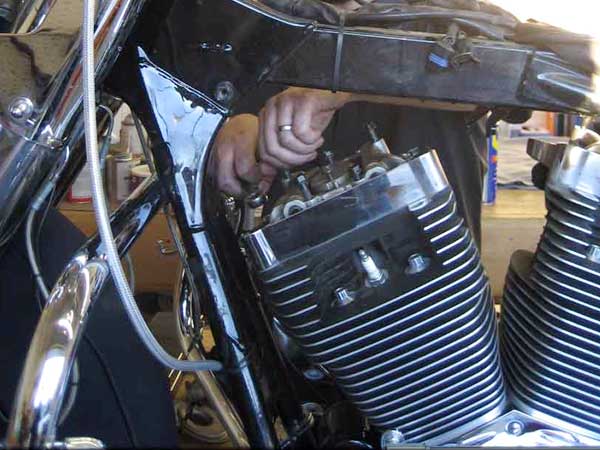
Bike Maintenance Tips

Bike Maintenance Tips

Bike Maintenance Tips


  • Regularly check tyre condition and air pressure. Optimum air pressure in the tyres of the bike is important for maximum road grip, stability, riding comfort and longevity of the tyres.
  • While under-inflated tyres wear unevenly, adversely affect handling, and more likely to fail from being overheated, over inflated tyres make the motorcycle ride more harshly, and more prone to damage from surface hazards, and wear unevenly.
  • Check your tyres for cuts and scrapes on your tires, which could cause a blowout. Also check the tyre treads once a week and have the wheels balanced and the alignment checked if the wear is uneven.
  • Engine oil plays an important role in ensuring smooth operation and maintenance of the bike and maintaining a correct engine oil level is important. Check engine oil level each day before operating the two–wheeler. Oil level should be between upper and lower marks. Top up engine oil if required. Check for oil leakage.
  • Clean the two-wheeler body surface regularly to maintain the surface finish. Before cleaning the motorcycle, ensure that the ignition switch unit, H.T. Coil and silencer are covered using plastic sheets.
  • Clean the motorcycle using low-pressure water. All painted surfaces should be washed only with water, as kerosene or detergent will damage the paint.
  • The motorcycle battery needs periodical maintenance to ensure a long and trouble free life. Check the electrolyte level against the top and bottom markings on the battery shell. Always top up with distilled water whenever required.
  • Check for any leakage from battery. It should be clean and free from any leakages. In case of non-use of motorcycle, battery should be kept fully charged and electrolyte level should be at Top mark.
  • Clean spark plug regularly. Every 750 km for two-stroke bike and every 1,500 km for four-stroke bike. Clean spark points (electrodes) with emery paper.
  • Keep carburettor clean. Every 1500 km, clean out the carburettor float chamber and other parts. Clean jets by forcing compressed air through them.
  • Keep both brakes properly spaced. Keeping them too tight (too urgent), or too loose (too late) is dangerous. Brakes should be tightened as per the rider’s personal style and requirement.
  • Check cables regularly for kinks, bends and frayed ends. Especially check ends. If one or more strands appear broken, replace immediately.
  • Always ensure that the tax is paid and Insurance cover (Insurance policy) is within validity period. Keep Tax Receipt and Insurance policy at home and keep xerox copy in bike.